

WASHINGTON D.C. (KEYT) — Federal regulators agreed Wednesday with Sable Offshore that local pipelines used to transport oil fall under exclusive federal oversight and are no longer subject to the authority of the California Office of State Fire Marshal.
“PHMSA [Pipeline and Hazardous Materials Safety Administration] agrees with your [Sable Offshore] determination that the Las Flores Pipeline is an interstate pipeline,” a letter from the Department of Transportation stated Wednesday. “The PSA [Pipeline Safety Act] vests with PHMSA exclusive regulatory authority over interstate pipelines and preempts States from adopting or continuing in force safety standards for interstate pipelines.”
In September, Sable Offshore submitted formal paperwork to restart oil production with the California Office of State Fire Marshal. The state safety agency responded the following month, saying certain conditions still needed to be met before an official restart could occur.
An image included in an informational slide presented to investors by Sable Offshore shows the assets that make up the Santa Ynez Unit, spanning federal and state waters as well as onshore facilities.
The company pushed back the next day in a letter stating that the Office of State Fire Marshal’s conclusions “are in error.” Sable argued that the safety tools cited by the state agency only needed to be completed within seven days of reaching initial steady-state operations, not prior to restarting production.
In November, Sable Offshore formally asked federal regulators at the U.S. Department of Transportation to assume oversight of the Houston-based company’s efforts to restart oil production.
According to an 8-K filing with the U.S. Securities and Exchange Commission, Sable Offshore informed investors that it had determined the pipeline connecting the Santa Ynez Unit to Pentland Station in Kern County qualifies as an interstate pipeline under the Pipeline Safety Act. As a result, the company said the pipeline is not subject to oversight by the California Office of State Fire Marshal.
That determination was submitted to the U.S. Department of Transportation’s Pipeline and Hazardous Materials Safety Administration for confirmation, along with a request to transfer all regulatory authority from the state agency to the federal government.
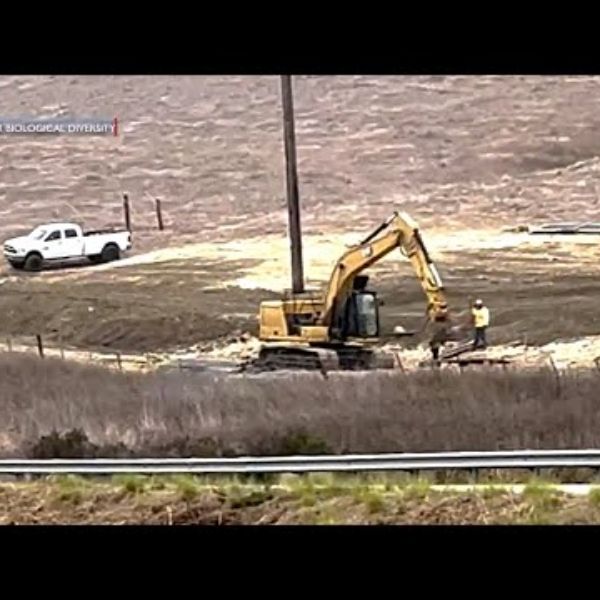
According to Wednesday’s letter, federal regulators conducted on-site inspections earlier this month alongside representatives from the State Fire Marshal’s office. They also reviewed written procedures and field observations throughout the Santa Ynez Unit, which includes pipelines extending to refineries across California.
“As portions of the Las Flores Pipeline were previously considered to be intrastate and regulated by OSFM, PHMSA is notifying OSFM that the Las Flores Pipeline is subject to the regulatory oversight of PHMSA,” the Department of Transportation concluded.
Although the State Fire Marshal’s authority over Sable Offshore’s restart plans has now been removed, the company continues to face several unresolved legal challenges, including:
Lease Violation: Public claims made in May that oil production had restarted may have violated leases issued by the California State Lands Commission
Civil Charges: The California Attorney General filed civil charges over alleged violations of state environmental laws while Sable and its subsidiaries conducted pipeline work
Permit Transfers: The Santa Barbara County Board of Supervisors voted Tuesday to deny the transfer of permits required for Sable Offshore to restart oil production
Criminal Charges: The Santa Barbara County District Attorney filed criminal charges, including five felony counts of knowingly discharging a pollutant into local waterways between at least October 2024 and April 2025, 16 misdemeanor counts of obstructing a streambed, and additional charges involving materials considered harmful to local wildlife
Just three days after criminal charges were filed, Sable Offshore’s chairman and CEO submitted a request to members of the federal National Energy Dominance Council seeking expedited permitting and installation of a Floating Production Storage and Offloading vessel.
The proposed offshore transportation and processing vessel would be located about one nautical mile from Platform Harmony and could bypass much, if not all, California regulatory oversight related to restart plans.
With the federal oversight change announced Wednesday, pursuing the offshore vessel alternative may no longer be necessary.
“Sable is committed to energy affordability and reliability and to recommencing oil sales in a safe and efficient manner,” said Steve Rusch, Vice President of Environmental and Governmental Affairs for Sable Offshore, when reached for comment earlier Wednesday. “Sable has met all requirements for the permit transfer as previously confirmed by Santa Barbara County staff and by the Planning Commission. Not only have we demonstrated all required operator capabilities and financial requirements, but we have gone above and beyond those requirements. Today’s [Tuesday’s] decision does not impact Sable’s ability to continue operating the SYU facilities and pipeline system or its plans to re-commence oil sales. Sable will continue to defend our vested rights to pursue domestic energy supplies that are critically needed to make California more affordable and prevent our state’s energy infrastructure from collapse.”
This article has been carefully fact-checked by our editorial team to ensure accuracy and eliminate any misleading information. We are committed to maintaining the highest standards of integrity in our content.











Leave a Reply