

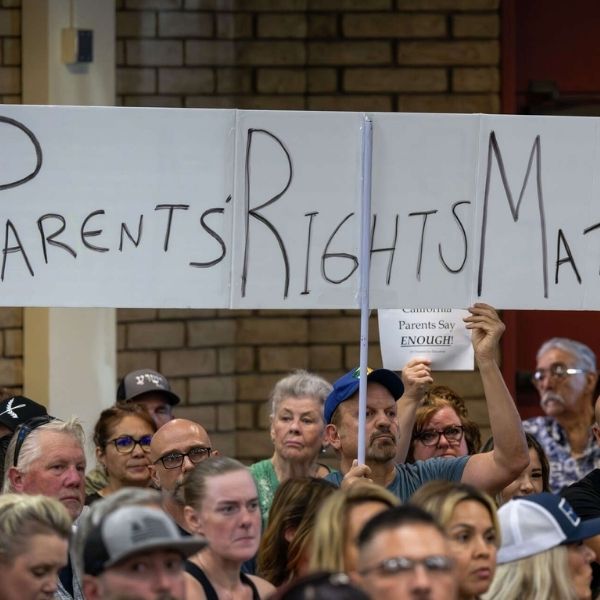
A federal judge has ordered California schools to allow teachers to inform parents if their child identifies as transgender and to limit the ways schools can affirm a student’s gender identity.
Key points from the ruling:
-
U.S. District Judge Roger Benitez of San Diego wrote that California’s policies interfere with parents’ access to “meaningful information” about their child’s gender identity choices.
-
Schools cannot mislead parents by withholding educational records or using different names or pronouns if parents object. Teachers and staff must refer to the child using the parent-approved name and pronouns.
-
Schools are also prohibited from interfering with employees who choose to tell parents that a child has shown signs of “gender incongruity,” such as changing preferred names or pronouns.
-
The ruling builds on a prior decision allowing Escondido Union School District to disregard state Department of Education guidance. Benitez’s order now applies to all California school districts.
State Response:
-
Superintendent Tony Thurmond said the policy requiring nondisclosure is no longer on the Department of Education website.
-
Attorney General Rob Bonta’s office has asked Benitez to stay the ruling while the state appeals to the 9th U.S. Circuit Court of Appeals.
-
Legislature’s LGBTQ Caucus criticized the ruling as “forced outing policies” that harm students’ mental health and academic success.
-
Governor Newsom’s office referred questions to Bonta. A 2024 law, AB1955, allows teachers discretion to inform parents but does not require disclosure.
Legal and Personal Context:
-
Another federal judge, John Mendez of Sacramento, has upheld nondisclosure policies, citing protection of transgender students from hostile reactions.
-
Benitez, who has faced prior reprimand for mistreatment of a child in court, suggested that parental involvement may be necessary for mental health guidance regarding transgender youths.
-
He argued the state’s policies may harm both students and parents, including by limiting parental rights under the Fourteenth Amendment and First Amendment protections for religious guidance.
The ruling is expected to be challenged in the 9th Circuit Court of Appeals, and the issue could eventually reach the U.S. Supreme Court, which has recently ruled on transgender rights in other contexts.
This article has been carefully fact-checked by our editorial team to ensure accuracy and eliminate any misleading information. We are committed to maintaining the highest standards of integrity in our content.











Leave a Reply