

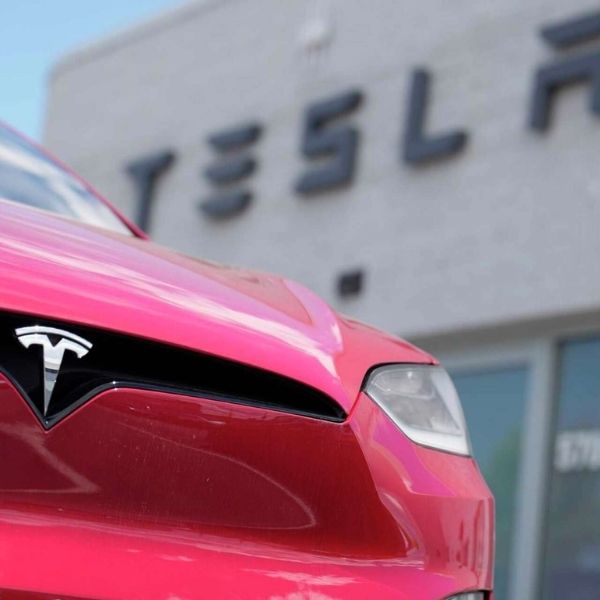
Tesla has 90 days to address claims in its advertising for self-driving and Autopilot features that state officials say are misleading, according to an announcement Tuesday from the California Department of Motor Vehicles.
If the company fails to fix the issue, it could lose its license to sell vehicles in California for 30 days.
The decision stems from a long-running case before Administrative Judge Juliet Cox in Oakland. Last month, she ruled in favor of a broader suspension of Tesla’s business, which would have barred the company from both manufacturing and selling vehicles for 30 days. DMV leaders later “indefinitely” stayed Cox’s ruling related to manufacturing, said Steve Gordon, the department’s director.
However, the DMV left open the possibility of blocking Tesla from selling vehicles, a move that could significantly impact the electric carmaker as it already faces political backlash tied to its chief executive, Elon Musk. Officials temporarily stayed the sales suspension, giving Tesla a 90-day window to address the concerns and offering the company “one more chance,” Gordon said.
Technically, the stay lasts 60 days, with Tesla given an additional 30 days to respond or take other action, Gordon explained.
“We’re really asking Tesla to do their job, as they’ve done in other markets, to properly brand these vehicles,” Gordon told reporters during a video news conference Tuesday afternoon, shortly after the state sent its formal decision to the company.
At the center of the case are four phrases or product descriptions from Tesla’s website that state officials describe as ambiguous or misleading. These include the terms “autopilot” and “full self-driving capability,” a claim that the system “is designed to be able to conduct short and long-distance trips with no action required by the person in the driver’s seat,” and statements suggesting a Tesla can drive passengers to their destination by navigating streets, freeways, and intersections before automatically parking itself.
“These labels and descriptions represent specifically that respondent (Tesla)’s vehicles will operate as autonomous vehicles, which they could not and cannot do,” Attorney General Rob Bonta wrote in a July 17 brief.
“We want these terms to be clarified so they are not misleading,” Gordon said. “So they do not lead people to believe they are an automated driving system, also known as an autonomous vehicle, when in fact, as Tesla claims, they are an advanced driving system.” He added that Tesla has already resolved similar issues in markets outside California.
During the proceedings, Tesla’s attorneys argued that while the company’s driver-assistance technology qualifies as “state of the art,” Tesla “has always made clear” that its vehicles are not fully autonomous and require active supervision from a human driver.
This article has been carefully fact-checked by our editorial team to ensure accuracy and eliminate any misleading information. We are committed to maintaining the highest standards of integrity in our content.




Leave a Reply