

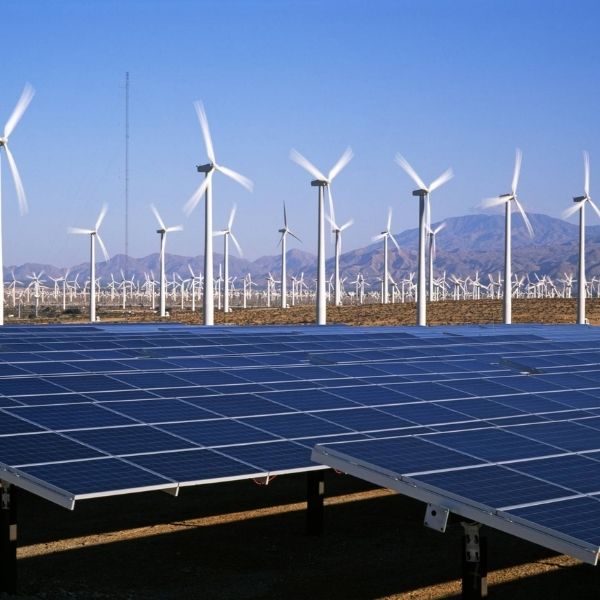
A high-profile wind energy project proposed in far Northern California appeared poised for approval. The Fountain Wind Project in Shasta County planned to install 48 turbines, some reaching nearly 600 feet tall, with enough capacity to power about 80,000 homes.
Gov. Gavin Newsom and California’s Democratic-led Legislature passed a landmark law in 2022 granting the state authority to approve renewable energy projects instead of local governments. Lawmakers designed the measure to help California secure enough clean power to meet its climate goals.
On Friday, however, the California Energy Commission rejected the Fountain Wind Project after years of opposition from local residents.
The commission, which assumed jurisdiction over the project, voted unanimously to deny it. Commissioners agreed with critics who argued that the project’s benefits did not outweigh its environmental, safety, and tribal impacts.
“It’s never easy to deny a project, especially a renewable energy project, knowing our goals,” said Commissioner Nancy Skinner. She added that the state law aimed at expanding clean energy does not guarantee approval for every proposal.
The project would have covered 2,855 acres along a mountainous ridge near the small community of Burney. According to the commission’s analysis, the development would have caused unavoidable forest damage, harmed birds and bats, interfered with firefighting aircraft, and degraded culturally significant tribal lands.
“We identified 47 significant unmitigable impacts,” said Drew Bohan, executive director of the California Energy Commission, who helped prepare the 1,200-page assessment. “This is the largest number of impacts in our history.”
Lawmakers passed Assembly Bill 205 three years ago to allow wind and solar developers to bypass local governments by seeking streamlined approval from the California Energy Commission. The law aims to help California generate 100% of its electricity from carbon-free sources by 2045.
Shasta County officials had already rejected the Fountain Wind Project before the developer, Houston-based ConnectGen, turned to the state under the new law. ConnectGen has since been acquired by Spain-based Repsol. The proposal became the first project reviewed by the commission under AB 205.
The shift in authority angered local leaders, who accused the developer of taking a “second bite at the apple.” Shasta County sued the California Energy Commission, arguing the law stripped local control. The lawsuit was paused until after the commission’s vote.
Opposition to the project united an unlikely coalition that included local Republicans, environmental advocates, and tribal communities.
“These lands are sacred to us,” said Yatch Bamford, chairman of the Pit River Tribe, whose ancestral lands span much of Northern California. “We understand more than anyone the urgency of addressing climate change … (but) California can achieve its clean-energy future while acknowledging the rights and concerns of indigenous people.”
A smaller wind farm already operates on nearby Hatchet Ridge, but dozens of tribal members spoke out against the Fountain Wind Project during Friday’s hearing in Sacramento.
Bohan emphasized that the decision did not signal opposition to wind power.
“I want to note that the federal administration is openly hostile to wind energy,” he said. “The CEC is not.”









Leave a Reply