

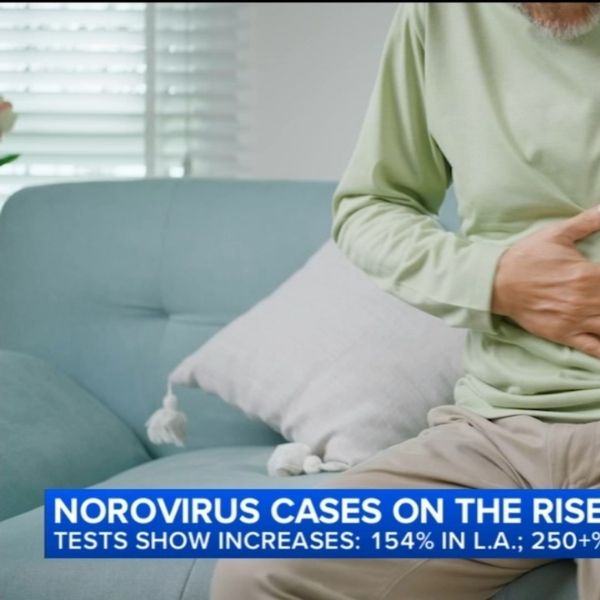
Health officials are reporting increased norovirus activity in parts of California, with signs of broader spread emerging across the Los Angeles region as the winter season begins.
Data from the Los Angeles County Department of Public Health show rising levels of norovirus detected in wastewater, a key indicator that the highly contagious virus is circulating more widely in the community, according to a report by the Los Angeles Times.
State officials say not all areas are seeing major increases yet. Nationwide, however, norovirus test positivity reached 11.69% for the week ending Nov. 22, up from 8.66% two months earlier, according to the U.S. Centers for Disease Control and Prevention. In the western United States, positivity rates were even higher, climbing from 9.59% to 14.08% during the same period.
Doctors are also closely tracking a newer strain known as GII.17, which could trigger significantly more illness than in a typical season. Some experts estimate the variant could lead to as much as a 50% increase in norovirus cases. Norovirus activity usually peaks during the colder months, from November through April.
Norovirus, often referred to as the “stomach flu” or “winter vomiting bug,” causes sudden vomiting and diarrhea. Other symptoms commonly include nausea, stomach cramps, body aches, headaches, and fever.
Outbreaks frequently occur in places where people gather closely, such as cruise ships, nursing homes, jails, and schools. The virus is the leading cause of foodborne illness in the United States, responsible for about 58% of domestically acquired food-related infections each year, according to the CDC.
The virus spreads easily, with as few as 10 viral particles capable of causing infection. It is most commonly transmitted through direct contact, such as sharing food or utensils, but can also spread through contaminated food, water, or surfaces.
People of all ages can become infected, though young children, older adults, and individuals with weakened immune systems face higher risks. Dehydration caused by vomiting and diarrhea is the most serious complication.
There is no specific medication to treat norovirus. Health officials recommend preventing dehydration by drinking plenty of fluids while avoiding alcohol, coffee, and tea. Anyone showing signs of dehydration is urged to seek medical care.
This article has been carefully fact-checked by our editorial team to ensure accuracy and eliminate any misleading information. We are committed to maintaining the highest standards of integrity in our content.















Leave a Reply