

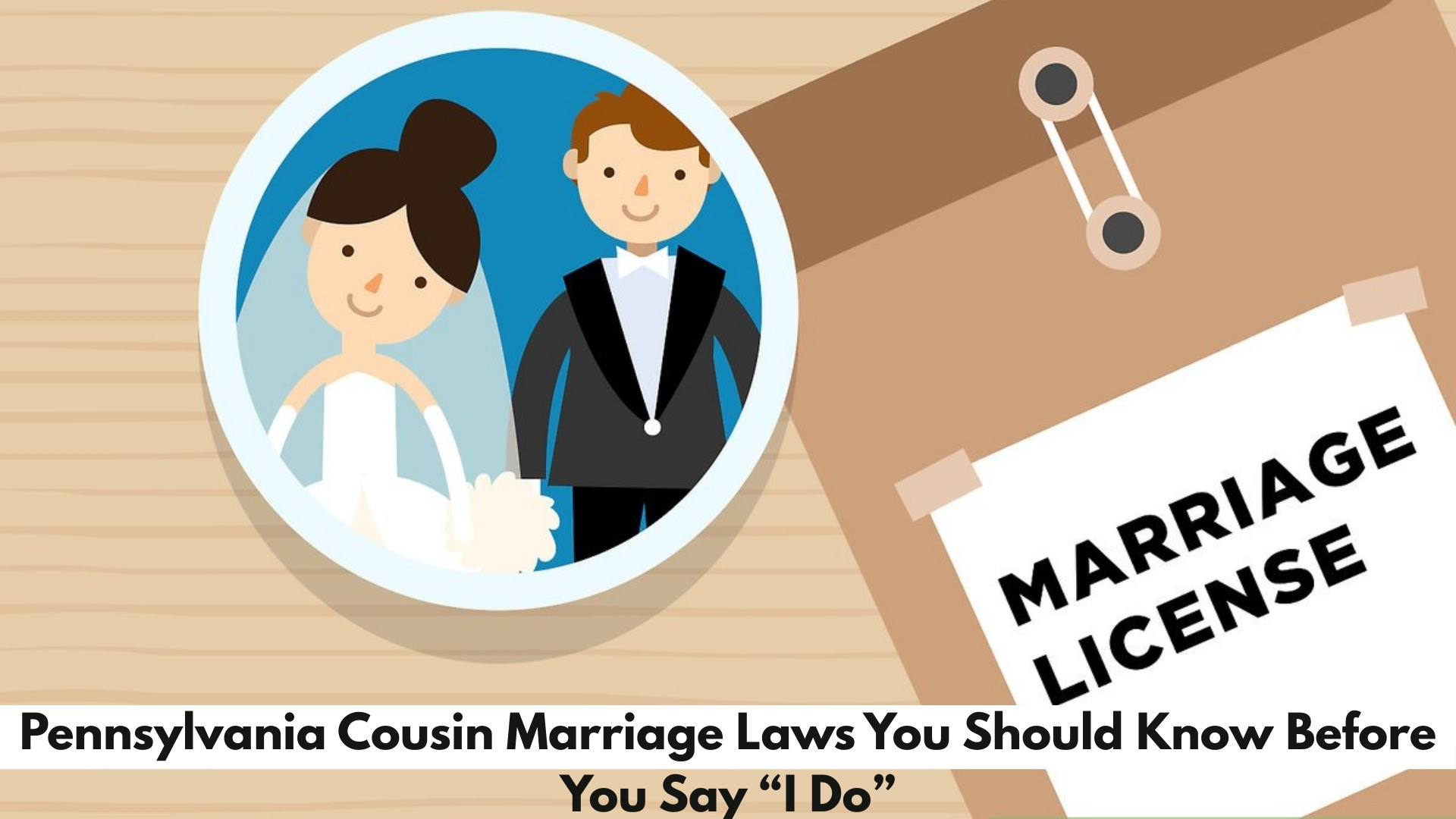
Love is often described as a force that knows no boundaries, but in the Commonwealth of Pennsylvania, it certainly knows legal boundaries. For couples who share a bloodline, specifically first cousins, the path to the altar is not just complicated—it is blocked by state statute.
If you are researching consanguinity laws in the United States, you likely already know that the legal landscape is a patchwork quilt. While states like New York and New Jersey allow first-cousin marriage without restriction, Pennsylvania stands firmly in the “prohibited” camp. However, for legal enthusiasts and couples alike, a simple “no” doesn’t explain the nuance of the law, the distinction between civil and criminal penalties, or the complex reality of out-of-state marriages.
This guide provides a comprehensive deep-dive into Pennsylvania’s cousin marriage laws, the history behind them, the genetic realities versus the myths, and what you need to know before making any life-altering decisions.
The Legal Landscape: Is First Cousin Marriage Legal in PA?
The short answer is no. As of 2025, you cannot walk into a Courthouse in Philadelphia, Pittsburgh, or Harrisburg and obtain a marriage license if you are first cousins.
The Statute: Title 23 § 1304
The prohibition is codified in 23 Pa. C.S. § 1304 (Restrictions on issuance of license). Under Section (e) regarding consanguinity (blood relation), the law explicitly states:
“No marriage license may be issued to applicants within the prohibited degrees of consanguinity which are as follows… A man may not marry his first cousin. A woman may not marry her first cousin.”
This statute places first cousins in the same prohibited category as siblings, parents, and aunts/uncles regarding marriage licensing.
Void vs. Voidable: A Crucial Legal Distinction
In family law, there is a massive difference between a marriage that is “voidable” and one that is “void.”
-
Voidable: The marriage is valid until someone takes legal action to annul it.
-
Void: The marriage is considered invalid from the very beginning, as if it never existed.
In Pennsylvania, a marriage between first cousins is considered void ab initio (void from the start). According to 23 Pa. C.S. § 3304, a court may declare a marriage void where the parties are related within the prohibited degrees of consanguinity. This means that even if a clerk accidentally issued a license, or if a ceremony took place, the state views the union as a legal nullity.
Is It a Crime? The Difference Between Invalid Marriage and Incest
This is where Pennsylvania law gets legally fascinating and distinct from many other states. While you cannot marry your first cousin, doing so (or being in a relationship with one) does not necessarily trigger the state’s criminal incest statutes.
The Criminal Statute: 18 Pa. C.S. § 4302
Pennsylvania’s criminal code defines incest under Title 18 § 4302. A person is guilty of a felony of the second degree if they knowingly marry, cohabit, or have sexual intercourse with:
-
An ancestor or descendant (Parent/Child/Grandparent)
-
A brother or sister (whole or half blood)
-
An uncle, aunt, nephew, or niece.
Notice who is missing from that list? First cousins.
Unlike states such as Texas or Utah, where cousin marriage can sometimes fall under criminal incest statutes, Pennsylvania’s penal code generally excludes first cousins from criminal prosecution for incest.
The Takeaway: While a marriage attempt would be civilly void and the license denied, it does not strictly appear to be a felony crime for adult first cousins to cohabit in Pennsylvania, provided no other laws are broken. However, this is a nuanced area of law, and specific local interpretations can vary, so legal counsel is always advised.
Understanding “Degrees of Consanguinity”: Who Can You Actually Marry?
Many people are confused by the terminology of “removed” cousins. The law is very specific about degrees of kinship.
First Cousins (Prohibited)
First cousins share a set of grandparents. You are the child of your cousin’s parent’s sibling. This relationship is strictly banned from marriage in PA.
First Cousins Once Removed (Permitted)
This is the most common point of confusion. A “first cousin once removed” is either:
-
The child of your first cousin.
-
The child of your great-aunt or great-uncle (your parent’s first cousin).
In Pennsylvania, first cousins once removed are generally permitted to marry. The prohibition in Title 23 § 1304 stops at first cousins. If you are “once removed,” you are one step further away genetically and legally, which usually clears the bar for a marriage license.
Second Cousins (Permitted)
Second cousins share a set of great-grandparents. This relationship is entirely legal for marriage in Pennsylvania, as it is in all 50 U.S. states.
The Genetic Reality: Debunking the Myths with Statistics
One of the primary justifications for the 1993/1994 ban in Pennsylvania was public health concern regarding genetic defects. However, modern science suggests that the social stigma may outweigh the actual biological risk.
The Baseline Risk
To understand the risk, we must look at the “background risk” for the general population. For any two unrelated individuals, the risk of having a child with a serious birth defect (such as cystic fibrosis or spinal muscular atrophy) is approximately 2% to 3%.
The Cousin Risk
For first cousins, who share about 12.5% of their DNA, that risk rises. However, it does not skyrocket to the levels seen in horror movies.
-
The risk of birth defects for first cousins is estimated to be 4% to 6%.
-
This represents an absolute risk increase of roughly 1.7% to 2.8% over the general population.
Contextualizing the Stats
To put this in perspective, the genetic risk for first cousins is roughly comparable to the risk faced by a woman giving birth over the age of 40. While the risk is statistically significant (nearly double the baseline), it is not an automatic guarantee of health issues, leading many geneticists to argue that bans are based more on culture than science.
The “Las Vegas” Loophole: Recognition of Out-of-State Marriages
This is the most common question for Pennsylvania couples: “If we get married in New Jersey or Maryland (where it’s legal), will Pennsylvania recognize our marriage when we come home?”
The answer lies in the legal doctrine of Full Faith and Credit and the concept of Comity, but it is not a simple “yes.”
The General Rule
Pennsylvania generally recognizes marriages that were valid in the jurisdiction where they were performed. This is why a marriage in Vegas is valid in Philly.
The “Public Policy” Exception
However, states can refuse to recognize foreign marriages if they violate the state’s “strong public policy.”
Historically, Pennsylvania courts have been somewhat lenient, often recognizing out-of-state cousin marriages as valid because they are not considered “incestuous” under the criminal code (as noted above). If the act isn’t a crime, the “public policy” argument against recognizing the marriage is weaker.
The “Evasion” Risk
Some states have “Evasion Acts” that explicitly void marriages where residents leave the state solely to bypass local laws and immediately return. Pennsylvania does not have a harsh Evasion Act in the same vein as some other jurisdictions, but relying on this loophole carries risks. If a court decides to strictly interpret the “void” status of Section 1304, you could find your marriage challenged during probate (inheritance) or divorce proceedings.
Historical Context: When and Why Did PA Ban It?
It may surprise you to learn that for much of Pennsylvania’s history, first-cousin marriage was legal.
The ban is relatively modern. It was enacted via the Act of 1993, which amended the domestic relations code. The ban officially took effect in January 1994.
Before this change, first-cousin marriage was valid under Pennsylvania common law. The shift in the 1990s mirrored a trend in several US states aiming to modernize family codes, though interestingly, the US remains an outlier globally; first-cousin marriage is legal in the vast majority of Europe, Canada, and the Middle East.
Key Takeaways Table
| Feature | Status in Pennsylvania |
|---|---|
| First Cousin Marriage | Illegal (Void) |
| First Cousin Once Removed | Legal |
| Second Cousin Marriage | Legal |
| Criminal Penalty? | Generally No (Not listed in Incest Statute) |
| Genetic Risk Increase | ~1.7% – 2.8% above average |
| Nearest Legal States | New York, New Jersey, Maryland |
Conclusion: Love vs. The Law
While the heart wants what it wants, the Pennsylvania General Assembly has made its stance clear: first-cousin marriage is not state-sanctioned.
If you are a resident of Pennsylvania, you have three primary legal options:
-
Remain unmarried but protect yourself with robust legal contracts (wills, POAs).
-
Relocate to a state where your union is recognized (like New York, New Jersey, or Maryland).
-
Marry out of state and return, accepting the gray area and potential legal risks regarding the validity of your union in the eyes of PA courts.
Disclaimer: I am a content writer, not an attorney. This article is for informational purposes only and does not constitute legal advice. Family law is fact-specific. If you are considering marrying a cousin, consult with a qualified Pennsylvania family law attorney to understand your rights and risks.











Leave a Reply